


TL;DR: Key Takeaway
A deep dive into omnipresence marketing: what it is, why it works, and how local businesses can use paid ads, organic social, video content, and retargeting to become the obvious choice in their market.
Omnipresence marketing is the strategy of making your brand visible across every platform and touchpoint your potential customers use: paid ads (Meta), organic social media, video platforms, your website, Google Business Profile, and more. The goal isn't to be everywhere for the sake of it. It's to ensure that no matter where a prospect spends their time online, your brand shows up with a consistent, professional message.
Think about the brands you trust most. Chances are, you've seen them dozens of times across different platforms before you ever bought from them. That's omnipresence at work. It transforms a one-time ad impression into a lasting relationship built on familiarity, repetition, and trust.
For local businesses (contractors, restaurants, professional services, health and wellness), omnipresence is what separates the companies that consistently grow from those that reach a plateau and find it difficult to scale beyond referrals.
Most small businesses pick one channel and hope for the best. They run Facebook ads for a few months, or they post on Instagram a couple times a week, or they rely entirely on Google search. And for a while, it might work. But single-channel strategies have a ceiling, and they tend to reach it relatively quickly.
“The principle is simple: you wouldn't open a store and only put a sign on one street. Omnipresence is the digital equivalent of being visible on every street corner in your market.”
Omnipresence marketing works because of well-documented psychological principles that influence how people make buying decisions. Understanding these principles is the key to understanding why this strategy is so powerful.
Psychologist Robert Zajonc proved that people develop a preference for things they're exposed to repeatedly, even without conscious awareness. Every time someone sees your brand (your logo in a feed, your video in an ad, your team on a story), their comfort level with your business increases. This isn't opinion. It's neuroscience.
The classic marketing 'Rule of 7' says a prospect needs to encounter your brand at least seven times before they'll take action. In 2026, with the sheer volume of content people consume daily, that number is likely closer to 13–20+ touches. The only way to reach that threshold consistently is to be present on multiple platforms simultaneously.
When a prospect sees your brand on Facebook, then sees a testimonial video on Instagram, then visits your website and sees the same professional imagery, every touchpoint reinforces the others. Each channel validates the next, creating a compounding trust effect that no single channel can achieve alone.
Building true omnipresence doesn't require being on every platform that exists. It requires being strategic about the channels that matter most for your audience and connecting them into a unified system. Here are the four pillars that make it work:
Paid ads on Meta (Facebook & Instagram) and Google put your brand in front of people who don't know you yet. This is the top of the omnipresence funnel: the mechanism that introduces new prospects to your business at scale. Without paid, you're limited to organic reach, which on most platforms in 2026 is under 5% of your followers.
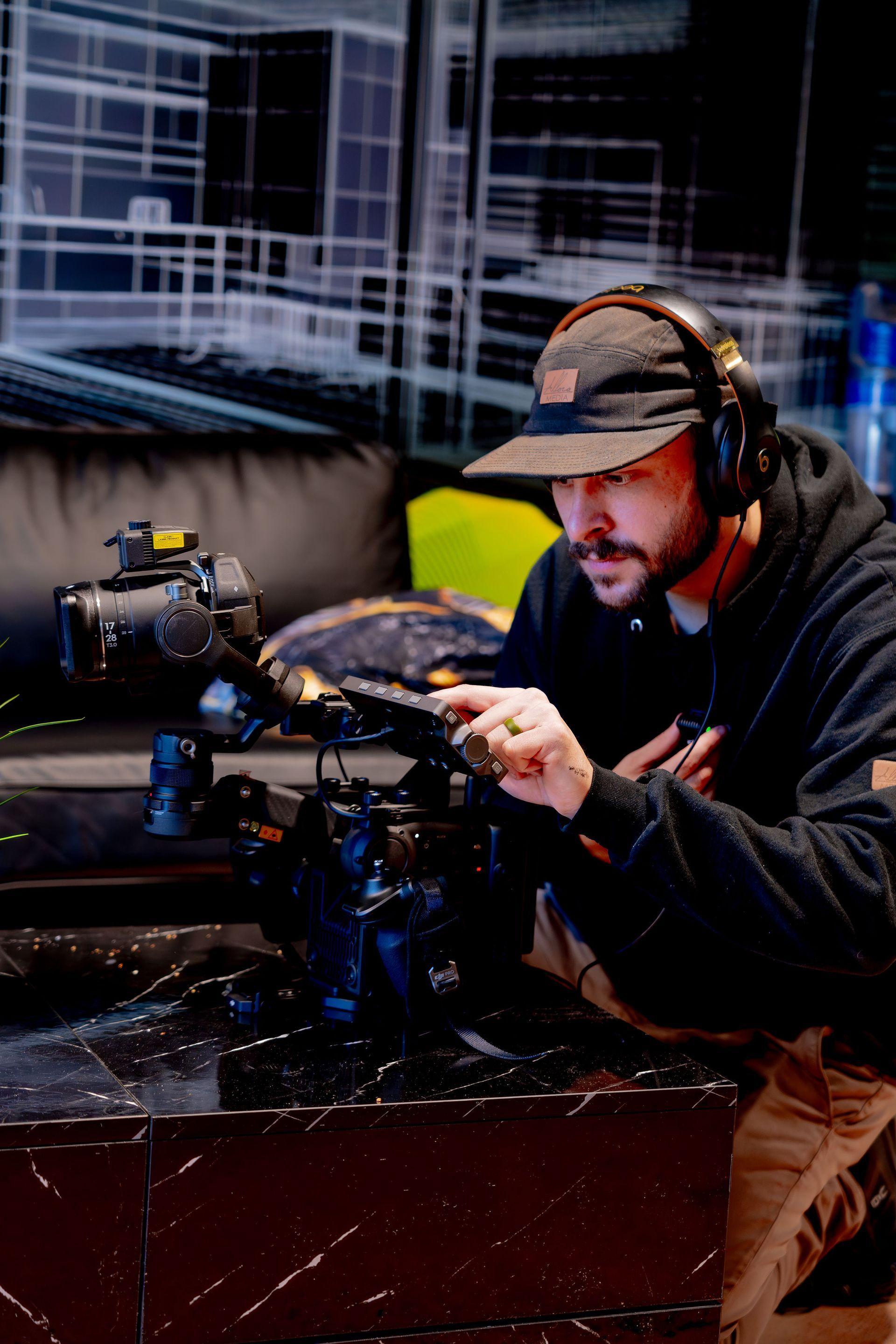
Video testimonials, project portfolios, team photography, branded graphics: this is the fuel that powers every other channel. Professional content makes your brand look established, trustworthy, and worth choosing, giving you a clear edge over competitors relying on low-quality visuals. Content is not a nice-to-have; it's the foundation of your omnipresence strategy.
Your organic social presence keeps your brand alive in people's feeds between ad impressions. It shows that your business is active, engaged, and real. When someone sees your ad and then checks your Instagram to 'vet' you, what they find there either reinforces or weakens the trust the ad built.
Retargeting ads follow people who have already engaged with your brand (visited your website, watched your video, liked your page) and bring them back with more specific, relevant messaging. This is where omnipresence converts awareness into revenue. Without retargeting, you're paying to generate attention and then letting it walk out the door.
Let's walk through what omnipresence looks like for a real local business, say a home remodeling contractor in Connecticut:
That's six touchpoints across four platforms, and at no point did the homeowner feel 'sold to.' They simply encountered a brand that looked professional, was clearly trusted by others, and showed up consistently. That's the power of omnipresence.
Key Insight
Omnipresence doesn't mean you need a huge budget. It means you need a system, one that connects your paid ads, content production, organic social, and retargeting into a coordinated strategy. Most local businesses don't lack budget. They lack a system.
Omnipresence requires content. Every channel needs something to show: your ads need creative, your social media needs posts, your website needs visuals, and your retargeting needs variations. But you don't need to create unique content for every platform. You need a repurposing system.
Start with one substantial piece of content: a 3-minute video testimonial, a project walkthrough, or a behind-the-scenes shoot. Then break it down into smaller pieces for each channel:
One shoot day, whether you hire a production company or use a good phone and tripod, can produce weeks or months of content across every platform. The key is planning the shoot with repurposing in mind: shoot horizontal and vertical, capture B-roll, and get multiple takes.
Omnipresence is a powerful strategy, but it requires a thoughtful approach. Here are the most common mistakes we see:
Tracking the right metrics is key. Here are the ones that tell you whether your omnipresence strategy is working:
You don't need to launch on every platform on day one. Building omnipresence is a phased approach that starts with the highest-impact channels and expands over time.
The Bottom Line
Omnipresence isn't reserved for big brands with big budgets. It's a strategy, and any local business can implement it with the right system in place. The businesses that commit to showing up everywhere, consistently and professionally, are the ones that grow their markets most effectively. Building omnipresence is one of the most worthwhile investments you can make in your marketing.
Jared Saucier
Founder & Creative Director at Allora Media. Running paid advertising campaigns and producing professional media content for Connecticut businesses.

A comprehensive playbook for integrating AI across your marketing stack, from audience research and content planning to campaign optimization and reporting. Frameworks for growing businesses and agencies.

Common reasons home service businesses struggle with marketing, and practical steps to diagnose and fix what's actually going wrong.
How AI tools, algorithm shifts, and vertical-first formats are reshaping video marketing for small businesses, and what to prioritize right now.
Book a free strategy call. We'll review your current marketing, show you the biggest opportunities, and give you a clear plan, whether you work with us or not.