

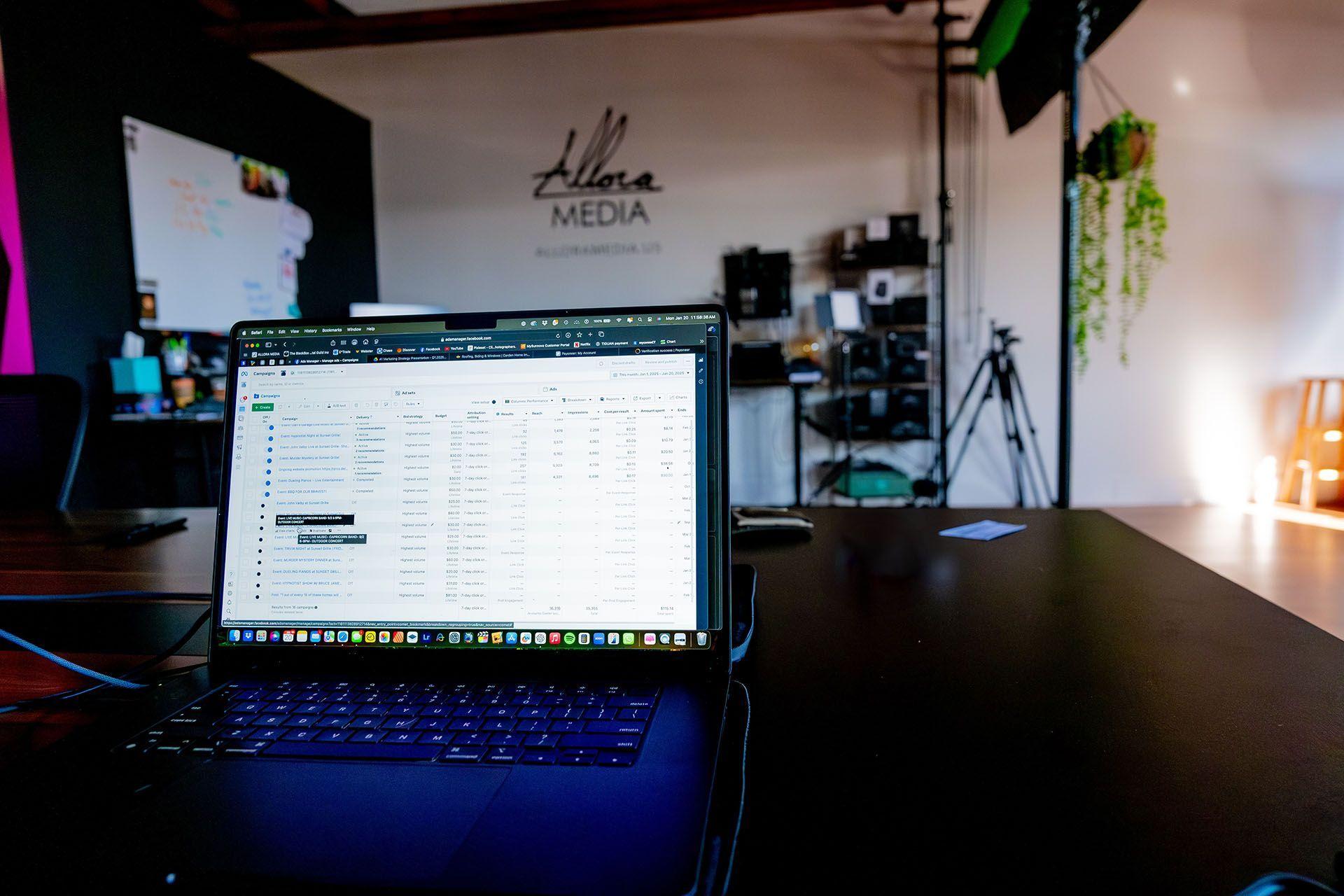
Campaign Budget vs Ad Set Budget on Facebook (CBO vs ABO Explained)
A plain-English guide to the difference between campaign budget optimization and ad set budgets on Meta: what each one does, and which to use for local lead generation.
By Jared Saucier June 26, 2026 8 min read
The One Setting Most Business Owners Get Wrong
When you build a Meta campaign, one of the first decisions Ads Manager forces on you is where to set your budget: at the campaign level or at the ad set level. It sounds like a technical footnote, but this single choice changes how your money gets spent, which audiences get fed, and how predictable your results are. Set it wrong and you'll either starve your best audience or spread your budget so thin that nothing ever exits the learning phase.
The two options have names that Meta keeps rebranding, which adds to the confusion. "Campaign Budget Optimization" (CBO) is now usually labeled "Advantage Campaign Budget." Ad-set-level budgeting is informally called "ABO" (Ad Set Budget Optimization). The names change; the underlying mechanics don't. Here's what each actually does.
Campaign Budget (CBO / Advantage Campaign Budget)
With a campaign budget, you set one total budget at the top of the campaign and Meta distributes it across all of your ad sets automatically. The algorithm shifts spend in real time toward whichever ad set is producing the cheapest results that day. You're handing the steering wheel to Meta and trusting it to find the winners.
- You set ONE budget for the whole campaign
- Meta decides how much each ad set gets, hour by hour
- Spend flows toward the best-performing audiences automatically
- You give up manual control over how much each audience receives
Best for
Established accounts with proven audiences, larger budgets, and enough conversion volume for Meta's algorithm to optimize confidently. CBO shines when you have several solid ad sets and want the system to back the winner.
Ad Set Budget (ABO)
With ad set budgets, you set a separate budget for each ad set, and Meta has to spend that amount on that specific audience. Nothing gets reallocated. If you give your "Fairfield County Homeowners" ad set $20/day, it spends $20/day on that audience no matter what, even if another audience is performing better.
- You set a budget for EACH ad set individually
- Meta must spend that amount on that exact audience
- You keep full control over how much each audience receives
- Underperforming audiences keep spending until you pause them manually
Best for
New accounts, testing phases, and small budgets where you want to guarantee each audience gets a fair test. ABO is how you protect a specific audience you KNOW matters from being starved by the algorithm.
Which One Should You Actually Use?
For most local businesses just getting going (contractors, restaurants, salons, service providers), we recommend starting with ad set budgets (ABO). When you're testing audiences and creatives, you want clean, controlled data: equal budget, equal chance, so you can see what genuinely works. CBO muddies that because Meta will quietly funnel spend toward one ad set before you have enough information to trust the decision.
- Phase 1 (Testing): Use ad set budgets. Give each audience and creative an equal, fair test for 7–10 days.
- Phase 2 (Scaling): Once you know your winning audiences and creatives, move them into a campaign budget (CBO) and let Meta optimize spend across the proven winners.
- Phase 3 (Maintenance): Keep a small ABO "testing" campaign running alongside your CBO "scaling" campaign so you're always feeding fresh creative into the system.
“Test with ad set budgets. Scale with campaign budgets. That order keeps your data clean and your winners funded.”
Common Mistakes to Avoid
- Turning on CBO with brand-new, untested audiences. Meta will pick a "winner" before the data is real and starve everything else.
- Putting wildly different audience sizes in the same CBO campaign. The broadest audience usually eats most of the budget.
- Setting ad set budgets too low to ever exit the learning phase (Meta needs roughly 50 conversions per week per ad set).
- Changing budgets every day. Each significant edit can reset the learning phase and waste spend.
New from the blog, by email
One note when Allora Media publishes something worth reading. No spam, unsubscribe any time.
Questions
Ready to apply these strategies to your business?
Book a free strategy call. We'll review your current marketing, show you the biggest opportunities, and give you a clear plan, whether you work with us or not.